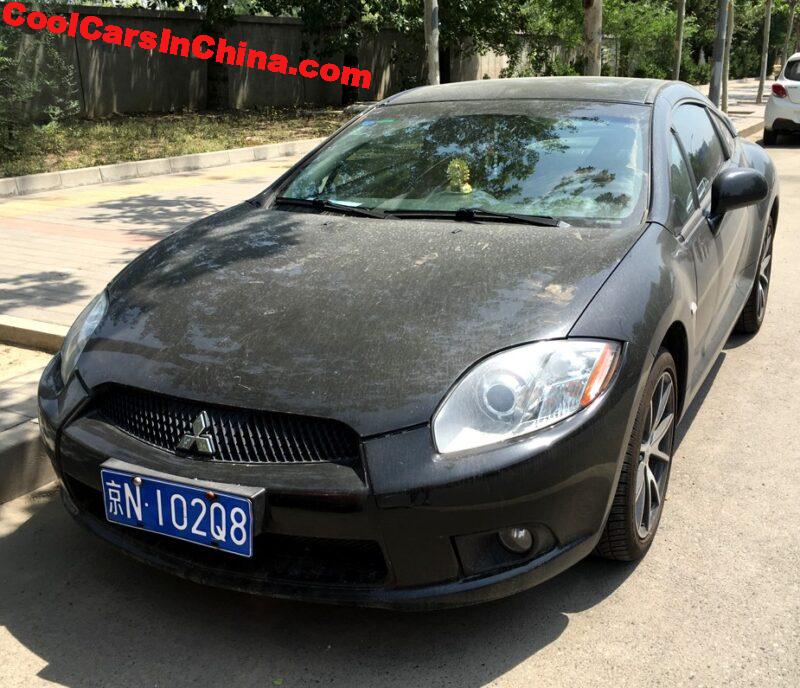
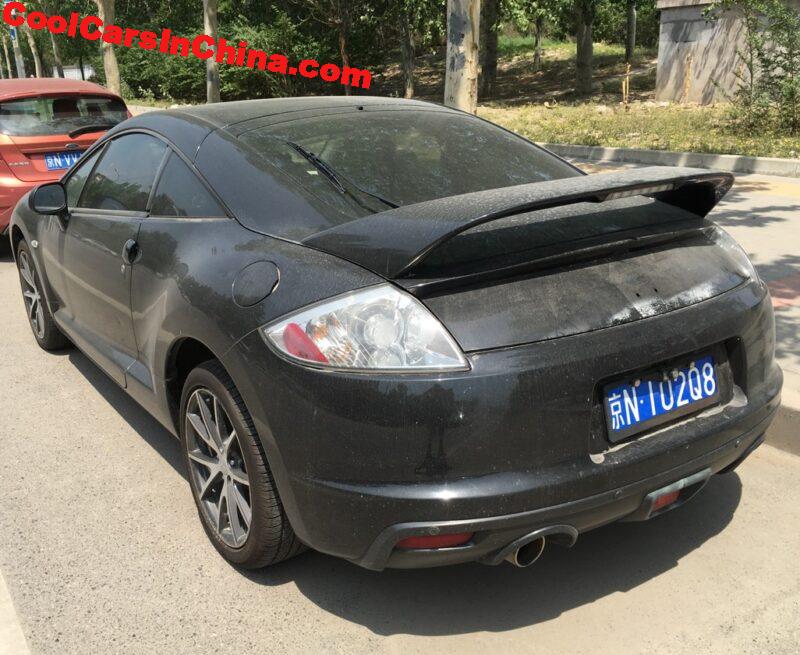
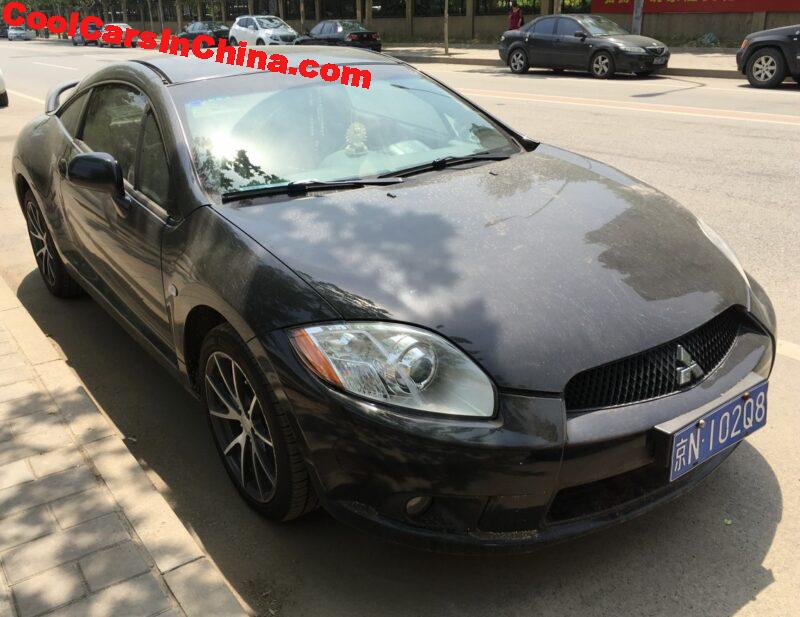
Here’s a Mitsubishi Eclipse coupe, seen in Beijing in May 2016. The compact Japanese sports car looked great in black, featuring a big wing on the back and fancy 10-spoke alloy wheels. The China-spec Eclipse was quite special compared to other markets, with unique trim levels and just one engine on offer. Here’s more:
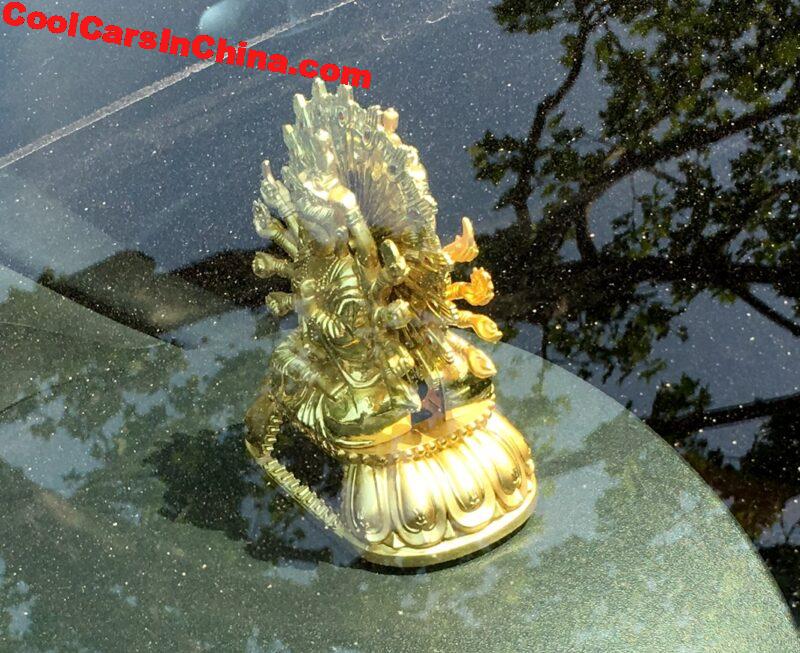
A solar-powered kitchy plastic statue of the Buddhist bodhisattva Thousand-Armed Guanyin (千手观音). The solar-powered mechanism presumably makes the statue’s arms move up and down. In China, people associate Guanyin with compassion and protection from danger, making her a popular choice for car ornaments. Her many arms symbolize her ability to help those in need. The owner isn’t necessarily religious, as many Chinese drivers display such decorations to bring good fortune and ensure safe travels.
The Mitsubishi Eclipse
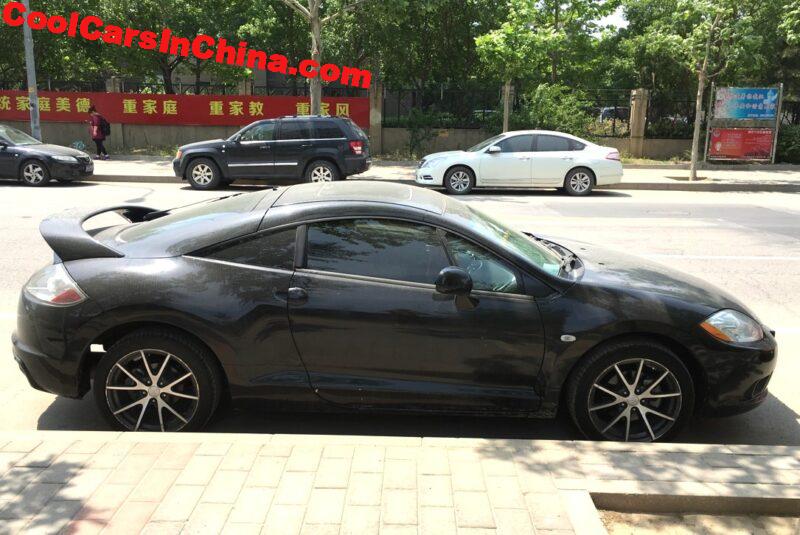
The Mitsubishi Eclipse is a compact Japanese sports car that Mitsubishi produced from 1989 to 2012. The car in the photos is a facelifted fourth-generation Eclipse, produced from 2009 until Mitsubishi discontinued the model in 2012 without a successor. Mitsubishi sold the Eclipse in China as an import from 2008 to 2011, exclusively with the 2.4-liter four-cylinder engine.
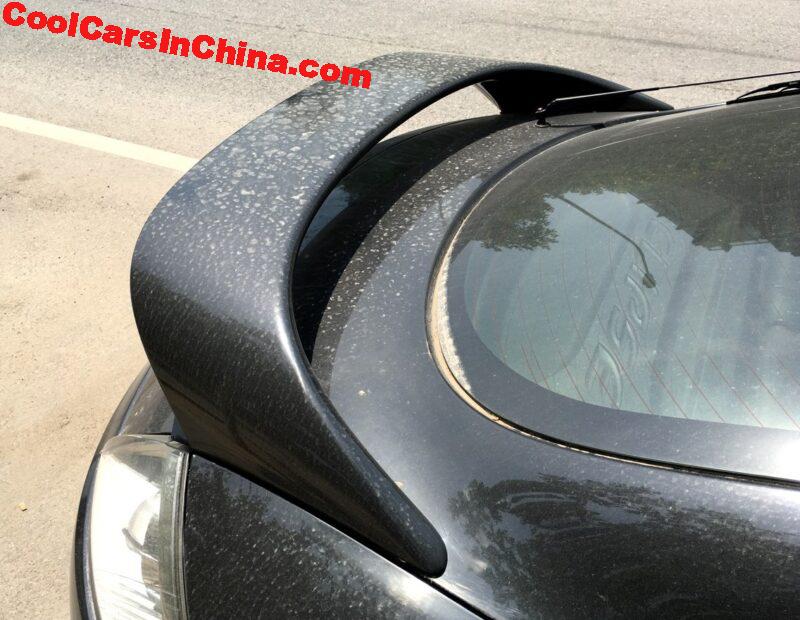
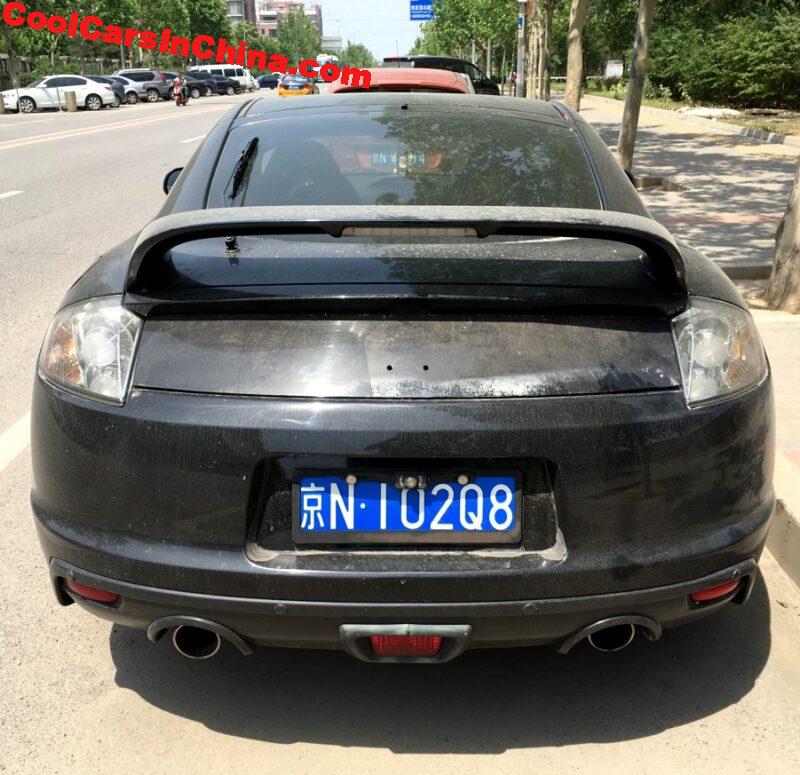
Note the Eclipse name on the parcel shelf. All trim levels for China came with a large rear spoiler, dual exhaust pipes, and 10-spoke 18-inch alloy wheels.
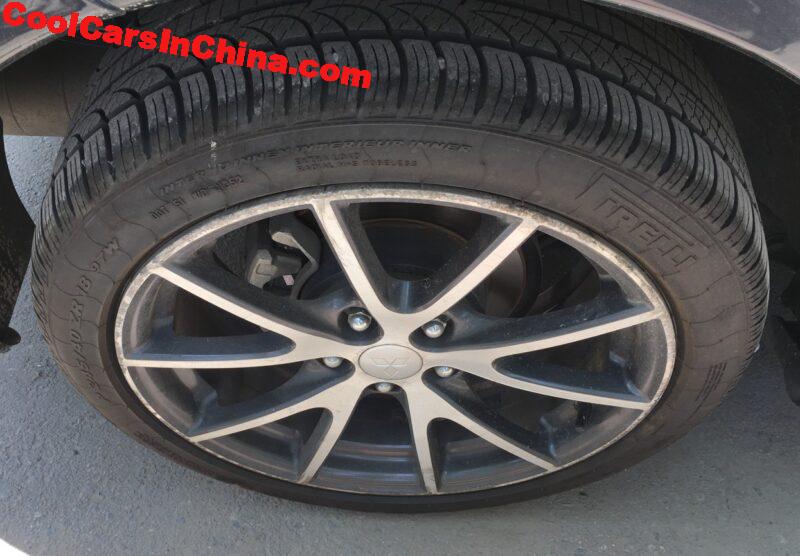
This differed from other markets, where base models had only a single exhaust pipe and no wing. The Chinese name is 伊柯丽斯 (Yīkēlìsī), a phonetic transliteration of Eclipse. The trim level names are very cool, and a little odd. There were four of ’em:
- 炫耀版, Xuànyào Ban, Dazzle Edition.
- 火影炫耀版, Huyng Xuànyào Ban, Fire Shadow Dazzle Edition.
- 炫动版, Xuàndòng Ban, Dynamic Edition.
- 火影炫动版, Huying Xuàndòng Ban, Fire Shadow Dynamic Edition.
The translations are mine, as no official English versions of the trim names exist. The sunroof identifies the car in the photos as either the Dynamic Edition or the Fire Shadow Dynamic Edition, since only these two trim levels had one.
The interior
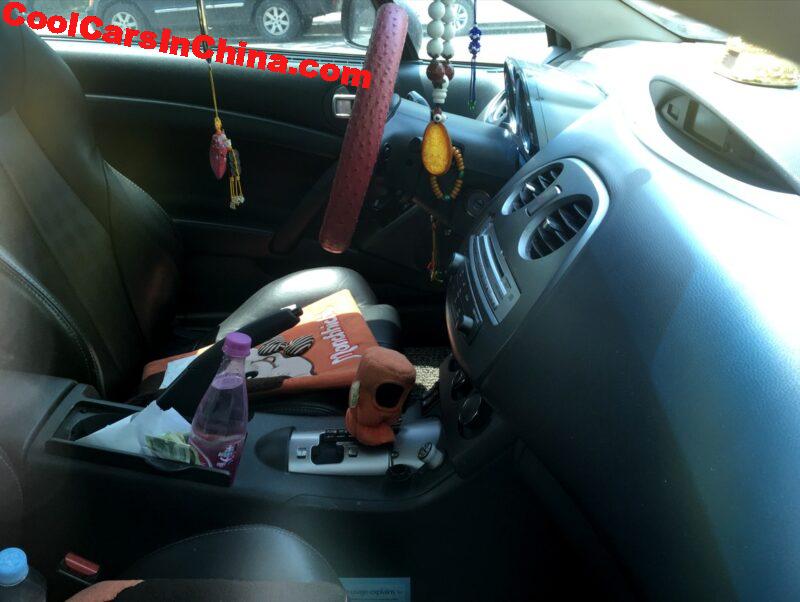
Well, it still has the original leather seats, without seat covers, which is rare in China. It also has several lucky charms hanging from the mirror and ceiling, a typical 2000s steering wheel cover, and a fur cartoon-ish hat covering the gear lever of the automatic ‘box. It all looks rather messy! The Dynamic/Fire Shadow Dynamic featured the electric sunroof, a 9-speaker stereo system with a six-disc CD changer and MP3 playback, and electric adjustable mirrors.
The specifications
The Chinese-market Mitsubishi Eclipse 2.4 used the 4G69 engine, which belongs to Mitsubishi’s Sirius (4G6) engine family. It produced 165 hp (121 kW) and 220 Nm, good for a 199 km/h top speed and 0-100 in 9.4 seconds. Mitsubishi mated the motor to a 4-speed automatic gearbox, sending all horsepower to the front wheels. It was the only engine Mitsubishi offered in China.
A smart move, as the 2.4 was already widely used in locally made Mitsubishis and scores of Chinese-brand cars. Shenyang-Mitsubishi manufactured the engine locally, although Mitsubishi sourced the Eclipse’s engine from Japan. But it was essentially the same unit, so owners could easily find spare parts and keep repair costs low.
Price and legacy
In 2008, the top-of-the-line Mitsubishi Eclipse Fire Shadow Dynamic Edition sold for 338,000 yuan, or approximately $48,650 at the average 2008 exchange rate. Imported sports cars like the Eclipse occupied a niche market in China, with few direct competitors. The closest rivals included the Hyundai Coupé, Mazda RX-8, and Peugeot 407 Coupé, all of which were imports as well – but none was a direct match on price and performance. Mitsubishi didn’t sell a lot of Eclipses, but it sure worked as a halo car for the brand. I remember going to Mitsubishi dealers where the Eclipse was positioned right in the middle of the shop, surrounded by Mitsubishi’s mundane, locally made cars.